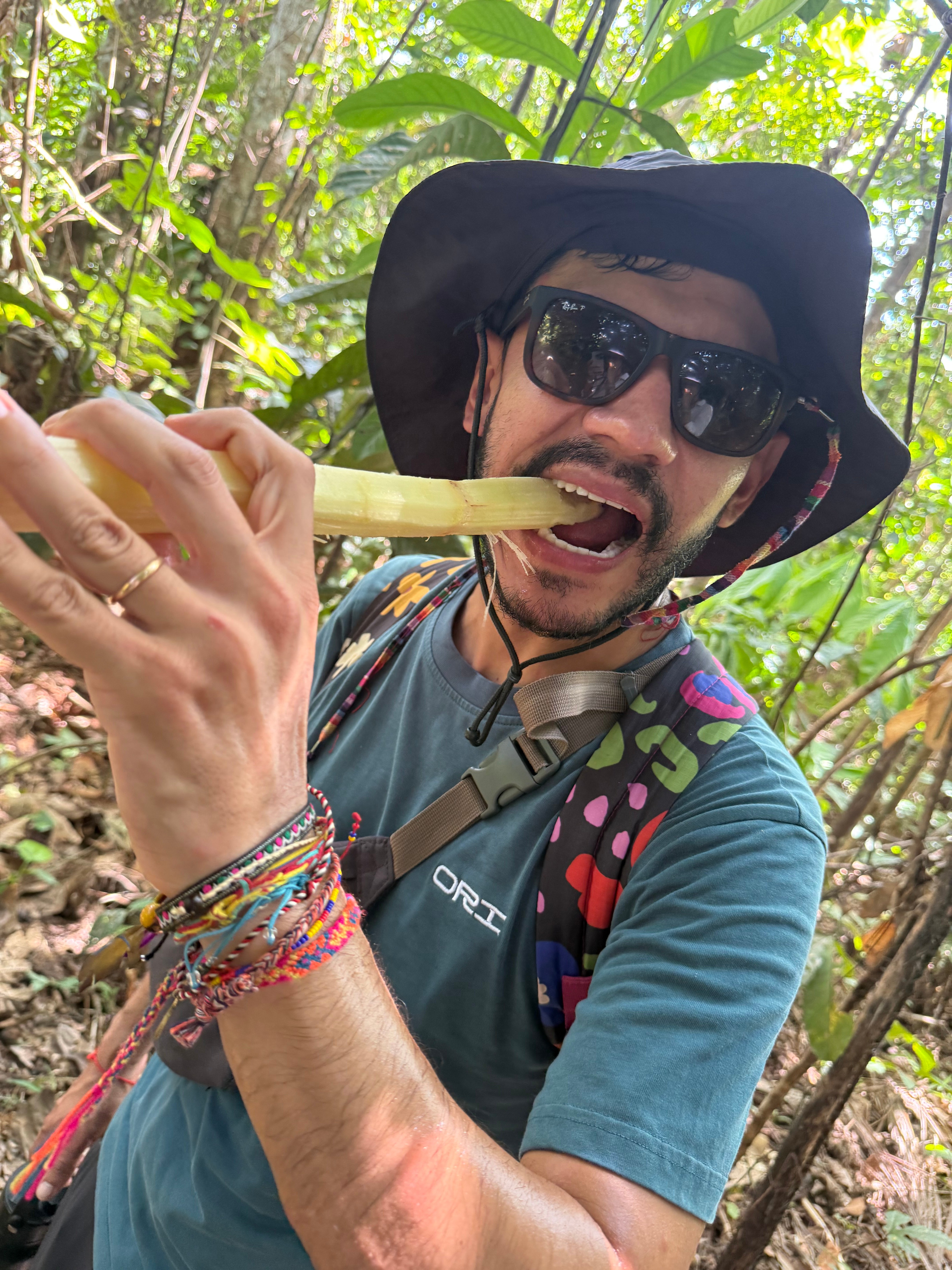
Summer is over
A 90-day summer that felt like a whole year: What I did during the summer and how fast my life is moving after The Trip?
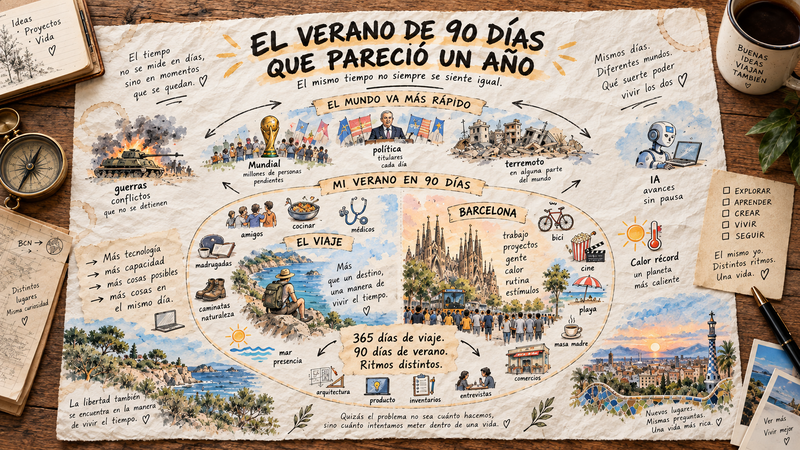

The astronomical summer in the Northern Hemisphere ended yesterday. It lasted about 90 days, though for me it felt like we had taken another Trip. Life in a major modern city moves very quickly: the commitments, the plans, technology, politics, the World Cup, the urge to do everything with everyone, the obligations, “real” life. That, combined with the technological race involving artificial intelligence (AI), which bombards us with news every day or even every hour, makes everything move very (very) fast.
Brett Scott, a British journalist, author, and activist, has written several articles about the impact of technology on our daily lives and how it accelerates our lives while (falsely) promising to make them much easier. This is what I have felt this summer, during which I devoted myself full-time (professionally speaking) to my startup and in which AI was my primary work tool.
In this update, I will try to discuss this by sharing some facts, anecdotes, and reflections from my summer, aiming to reconnect with my writing and kick off a new season of essays related to society, my business, The Trip, and life in general.
The last time I wrote here was the day before my birthday, back at the start of July. A lot has happened since then: Spain won the World Cup, a far-right president took office, and three days later an earthquake struck Colombia (facts are facts), Pogacar won the Tour de France again, AI labs released many models that are on the verge of ending us, the highest temperatures since 1780 were recorded in Barcelona (and perhaps the world), the wars in Iran, Palestine, and Ukraine continued, among a thousand other things in our “modern” world.
As for us, on a personal level, we returned to “normal” life and routine: we worked, reconnected with friends, met new people, made new friends, cooked a lot, debated the impact of AI, witnessed Barcelona’s problems firsthand through the eyes of El Born (drugs, robberies, and trash), went to the doctor, among various other daily tasks.
We didn't leave Barcelona except for a few bike rides and a day trip to Banyoles, and we even missed the total solar eclipse visible from Tarragona. After The Trip, a summer vacation or long travels were unjustifiable—at least economically 😅. That said, we reconnected with the city for better and for worse.
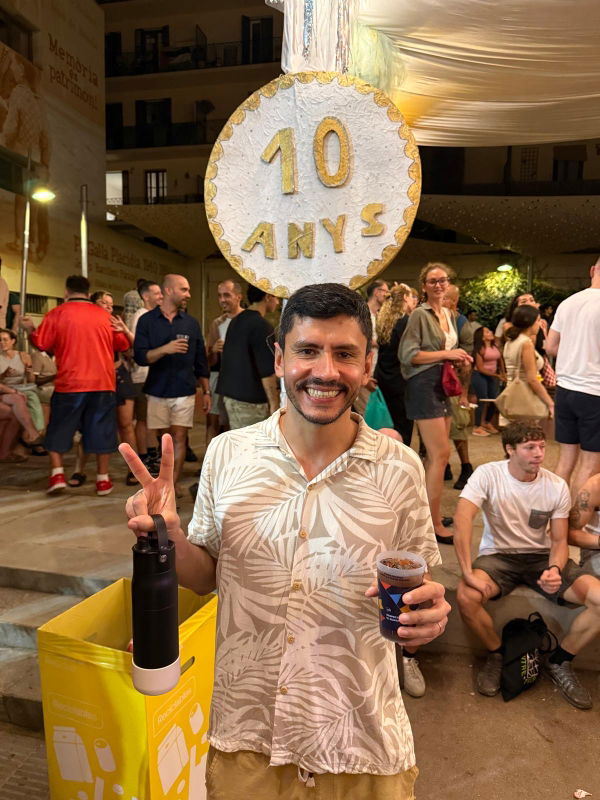
On one hand, the city offered us cinema on the beach and at Montjüic, the Grand Départ of the Tour de France, and the traditional Fiestas de Gràcia. I also celebrated 10 years since I first moved here, we went to the beach a couple of times, and I learned how to bake sourdough bread. On the other hand, we had a front-row seat to over-tourism, drug problems, robberies, and filth, and we experienced what it's like to endure intense heat without air conditioning. Is this unique to Barcelona? Probably not, but spending so much time in the city, living in a historic center that is increasingly deteriorating socially, was and is quite overwhelming.
Do we miss The Trip? Of course we do. How could we not miss the food, the adventures, the hikes, meditating every day, the nature? Besides, how could we not miss feeling like life moves at a slower pace, one where you actually have time to enjoy yourself? I can't prove that during The Trip time moved much slower, but I am certain it flowed at a calm, slow, reflective, and happy rhythm.
However, economically and—above all—rationally speaking, perhaps due to our culture, habits, or the system we grew up in, the trip couldn't go on forever. So here we are, adapting to the pace of a city like Barcelona, where the main draws right now are our friends and our professional lives.
Speaking of professional matters, over the summer I worked hard on my startup: I met in person with my co-founder, we analyzed the interviews in detail, created a report on them, brainstormed features, and determined the base product. We named the company, bought the domain, I attended the opening of a local shop the day after attending the closing party of another, helped perform two inventories (one "by hand" and one with AI), developed a prototype in Flutter and Firebase in 2 days (with AI) that has been in "production" for 28 days, and added a couple of new features afterward. I also co-worked with AI on various tasks for our base product development, including: implementing our design system in Pencil and Flutter, defining and starting development on our software architecture, deploying our base infrastructure on Google Cloud, and developing our app for local businesses—the list goes on. Several nights I went to "sleep" at three in the morning and worked some weekends.
Thanks to AI, I was able to do many things; I was faster. Is it making my life easier? I don't have a concrete answer yet. What is certain is that without AI, I wouldn't be where I am today in terms of product, ideas, and progress, considering we are just two people working on the project. I can't say it has made my life easier because it still fails a lot, it's hard to manage, and it often performs tasks I haven't asked for. Add to that the constant changes in how to work with AI: whether we use skills, agents, sub-agents, or delete the skills—it's a lot. That said, the greatest limitation of AI and, at the same time, its greatest driver is me (and the price of tokens).
As you can see, a lot has happened over the summer. Compared to The Trip, my life has moved much faster and is a bit more overwhelming. However, during this time I have reconnected with society, for better and for worse, and I have found a new professional goal that keeps me quite motivated and optimistic about the future.
This brings me back to Brett Scott's thesis and reminds me of the parable of the fisherman and the businessman tourist, written in 1963 by Heinrich Böll. It was written as a satirical story about the modern obsession with productivity and work:
The story tells of an encounter in a European coastal port between a wealthy, elegantly dressed tourist and a humble fisherman resting peacefully in his boat. The tourist, driven by a mindset of productivity and ambition, questions the fisherman for not being out at sea and begins to design an elaborate business plan for him: fish for more hours, buy more boats, build a factory, and eventually become an independent millionaire. When the fisherman asks what he would do after achieving all that success, the tourist excitedly responds that he could finally sit back and relax in the port, enjoying the sun and the sea; to which the fisherman, with a wise smile, replies that this is exactly what he is doing at this very moment.
The parable contrasts the modern mindset of productivity and accumulation—in my case, entrepreneurship—with the wisdom of a simple life focused on the present—in my case, The Trip. The story invites us to redefine the concept of success by reminding us that tranquility and peace of mind do not require a life of sacrifice, but a conscious choice in the present. I believe it is this latter point that is most relevant to me right now. Undoubtedly, there are economic and professional reasons for the startup, but there is also the motivation to help those who will be my clients and partners, so that this modern life can be more manageable. Today, I am building technology with the aim of making people's lives better, not with the aim of making them faster. We'll see if I succeed.

Comments
No comments yet. Be the first to comment!