
Talking with humans in the age of artificial intelligence
Developing products through human interaction


COVID-19 was an economic and emotional shock for many. Being isolated from others undoubtedly transformed our social and communication skills in many ways. I would say that, in most cases, it was for the worse.
In my case, my social and communication skills deteriorated significantly. On one hand, my social circle contracted, whereas before the pandemic it was frequently expanding. On the other, my professional interactions shifted to screens, which changed how I communicated with others; everything became much more digital and impersonal.
Other factors also played a relevant role in this change; for example, age and social media. As a result, my desire to meet new people casually was considerably reduced. My personality simply wasn't the same as before.
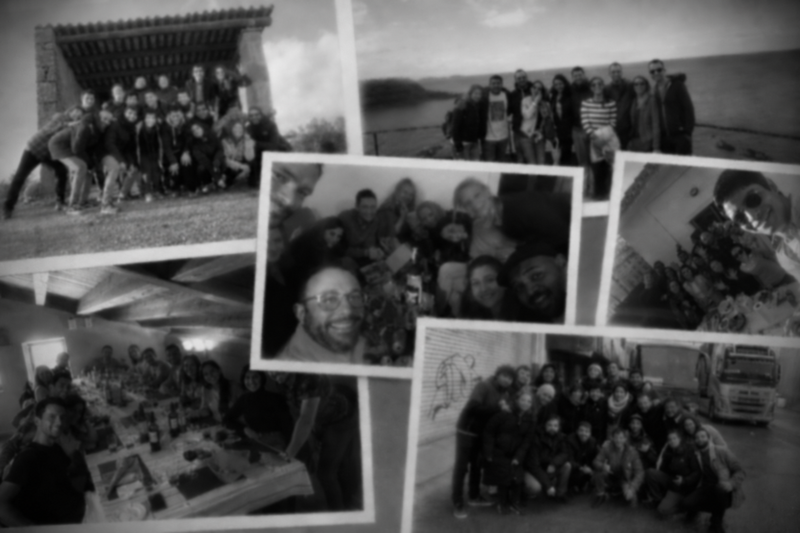
Those who know me would say I'm a very sociable person and that I've always been that way. However, the years following the pandemic didn't exactly align with that statement. I found it very difficult to expand my circle. When I returned to physical coworking spaces, I couldn't connect with people who weren't part of the companies I worked for—at least not like I used to.
I think part of the idea behind The Journey had a lot to do with my own discomfort and dissatisfaction with this personality shift. A part of me needed to rediscover the social human being I had carried inside for a long time. The Journey could be a great ally in meeting this need. Thus, one of the few goals of the trip was to return to interacting with strangers without fear.
While I won't talk much in this post about my interactions with strangers during The Journey, I can say that that year helped me tremendously in recovering my social skills. Today, talking to strangers is easier for me, and casual conversations are flowing more naturally. Oops… I think I went a bit long on the introduction, but anyway.
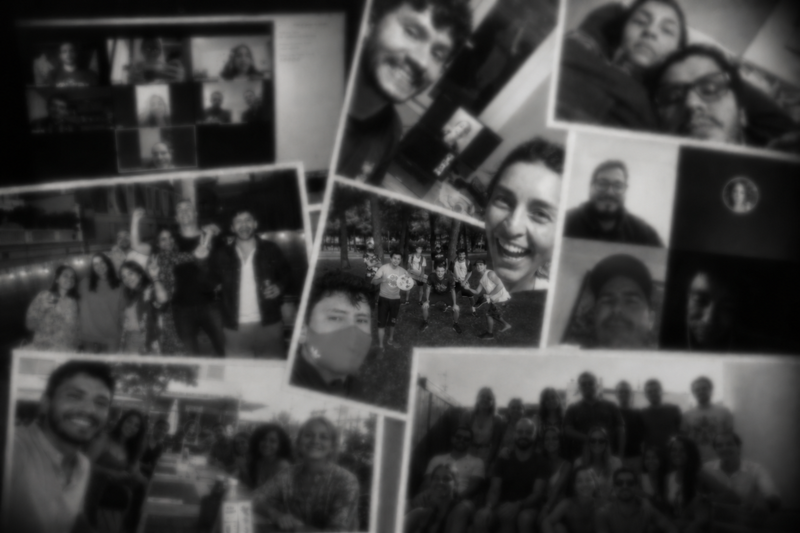
The point is that after returning, in addition to interacting with artificial intelligence (AI), I have dedicated myself to talking with human beings, particularly strangers. This is because I am in the process of ideation, design, and discovery for the value proposition of my current professional project.
Since I got back, I have spoken and attempted to speak with local business owners in Barcelona. Specifically, in two months I have interviewed 8 businesses for between 30 minutes and 3 hours each, spent about 3 days pounding the pavement entering local shops to try and secure interviews with their owners, written about 40 messages across email, WhatsApp, and LinkedIn, and am close to confirming about 5 more interviews… we'll see.
I haven't used AI here as much as some experts might recommend. While I have leaned heavily on AI for prospecting, drafting messages, and refining my pitch, among other tasks, the reality is that to talk to humans, fortunately, it is still important to have another human on the other side.
In fact, today more than ever, human-to-human interaction makes the most sense. If we accept the premise that AI will handle many of our operational tasks, who better than a human with more time and a lighter operational load to talk to other humans—customers, investors, friends, colleagues, neighbors?
Moreover, there is no better introduction to a stranger than another human who already knows them. Many of the interviews that materialized came through a friend of a friend of another friend. For now, AI doesn't introduce me to many people I know (I repeat, for now). While social media is an entry point, I've realized that when they can sense the person they are talking to, humans tend to share their problems, ideas, and strategies in greater detail. Perhaps that's just my perception bias. An important challenge for AI, then, will be opening doors not just by seeing the human as a prospect, but as a person with personality, charisma, and needs.
We decided to talk to humans to design our value proposition based on a methodology called Human-Centered Design (HCD), which is a creative approach to problem-solving that starts with people and results in innovative solutions tailored to their needs. HCD aims to prioritize desires and needs over data and the assumptions of creators. HCD allows you to dig into the root of the problem rather than staying on the surface.
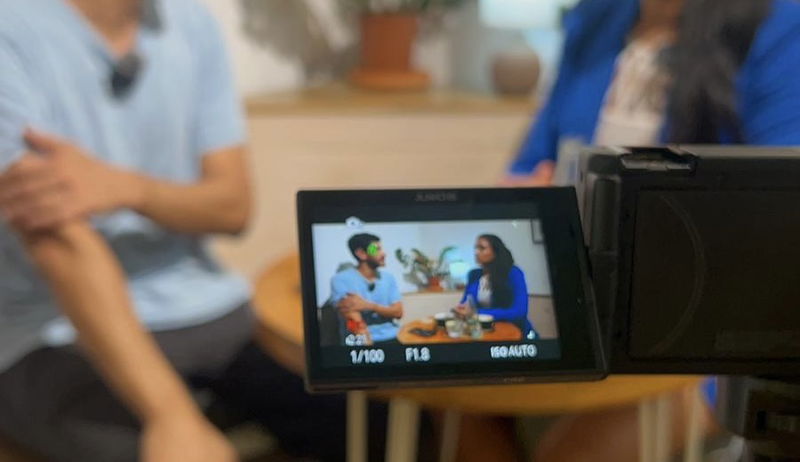
While I initially feared that a methodology like this might lead to "analysis paralysis," the reality is that it has opened my eyes to the deeper problems faced by those I had originally identified as my potential customers. Now, thanks to empathy and deep conversation, I’ve been able to recognize many circumstances—both positive and negative—that affect local businesses and truly drive their day-to-day operations. My initial idea is still there, but it is no longer the priority; it may be just one piece that helps solve the bigger picture.
Talking to humans consumes time and space, but it recharges ideas, thoughts, and feelings. Today, in the age of AI, we should have much more time to spend with humans, understanding our needs, our joys, and our sorrows, and helping each other. If we believe that AI will automate many of our mechanical tasks, why not open the door wider to reconnecting with those around us? Let's see AI as the tool that will allow us to recover what social media has slowly taken away: physical, emotional, and sensory connection with other humans.

Comments
No comments yet. Be the first to comment!